
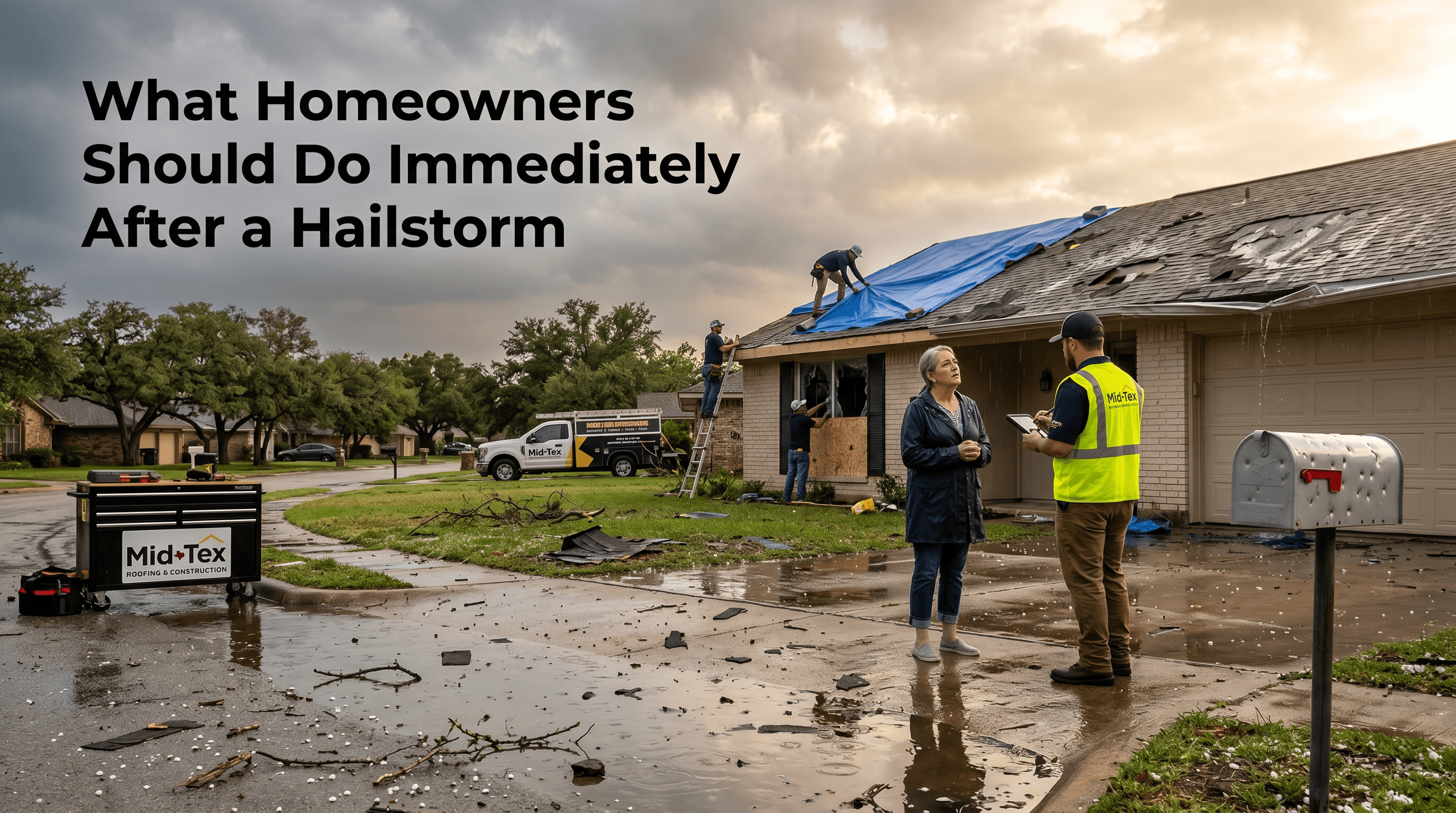
Hail storms can move through Central Texas in minutes, but the damage they leave behind can impact your home for years. In areas like Dublin, Riesel, Godley, Hallsburg, Groesbeck, and Lake Limestone, recent storms have left homeowners dealing with damaged roofs, broken windows, leaks, fallen debris, and unexpected repair costs.
One of the biggest mistakes homeowners make after a hailstorm is waiting too long to take action.
Even if your roof looks fine from the ground, hidden hail damage may already be compromising your home’s protection. Small cracks, bruised shingles, loosened flashing, or granule loss can quickly turn into serious leaks and structural problems during the next storm.
Knowing exactly what to do after a hailstorm can help:
- Prevent additional damage
- Protect your insurance claim
- Reduce repair costs
- Extend the life of your roof
- Keep your family safe
At Mid-Tex Roofing, we help Central Texas homeowners respond quickly after storms with:
- Emergency tarps
- Dry-ins
- Board-up services
- Free roof inspections
- Insurance claim assistance
- Roof replacement services
- Metal roofing upgrades
If your area recently experienced hail damage, here’s what homeowners should do immediately after a storm.
1. Stay Safe and Assess the Situation Carefully
The first priority after any severe storm is safety.
Hailstorms are often accompanied by:
- High winds
- Lightning
- Heavy rain
- Fallen power lines
- Broken tree limbs
- Structural damage
Before inspecting your property:
- Wait until the storm fully passes
- Avoid standing water near electrical areas
- Watch for broken glass or debris
- Stay away from damaged power lines
- Keep children and pets clear of hazardous areas
Do NOT climb onto your roof yourself after a storm.
Damaged roofing surfaces may be:
- Slippery
- Structurally weakened
- Unstable
- Unsafe to walk on
Professional roofing inspections are much safer and more thorough.
2. Check for Visible Signs of Roof Damage
Once conditions are safe, begin looking for visible signs of hail damage around your property.
Common indicators include:
- Missing shingles
- Cracked shingles
- Dented gutters
- Granules in downspouts
- Bent flashing
- Roof debris on the ground
- Water stains on ceilings
- Leaks inside the home
You should also inspect:
- Window screens
- Garage doors
- Outdoor AC units
- Mailboxes
- Metal fencing
If hail dented metal surfaces around your property, your roof may also have sustained damage.
Important:
Not all hail damage is visible from the ground. Hidden roof damage is extremely common after Texas storms.
3. Document Everything Immediately
Documentation is one of the most important steps after a hailstorm.
Before temporary repairs begin, take photos and videos of:
- Roof damage
- Missing shingles
- Dented gutters
- Interior leaks
- Water stains
- Broken windows
- Fallen tree limbs
- Hail accumulation
- Damage to surrounding property
This documentation may help support your insurance claim later.
Try to capture:
- Wide photos of the entire property
- Close-up damage photos
- Date and time records if possible
The more evidence you have, the easier the claims process may become.
4. Prevent Additional Water Damage
One of the most urgent steps after a hailstorm is preventing additional water intrusion.
Even small roof openings can allow rainwater into:
- Attics
- Ceilings
- Walls
- Insulation
- Electrical systems
Without temporary protection, water damage can spread quickly.
This is why emergency roofing services matter.
At Mid-Tex Roofing, we provide:
- Emergency tarps
- Dry-ins
- Board-up services
These temporary solutions help protect your home while permanent repairs or insurance approvals are being handled.
Why This Matters
Insurance companies may deny portions of claims if homeowners fail to take reasonable steps to prevent additional damage after a storm.
Acting quickly helps protect both your home and your insurance coverage.
If your roof was damaged during recent storms in Groesbeck, Godley, Dublin, or surrounding areas, call Mid-Tex Roofing immediately for emergency storm response.
 (254) 218-3735
5. Schedule a Professional Roof Inspection
Many forms of hail damage are difficult for homeowners to identify.
Hidden storm damage may include:
- Bruised shingles
- Cracked fiberglass mats
- Granule loss
- Lifted seal strips
- Flashing separation
- Small punctures
- Moisture intrusion beneath shingles
A professional inspection can determine:
- Whether your roof has storm damage
- The severity of the damage
- Whether repairs or replacement are needed
- Potential insurance claim eligibility
At Mid-Tex Roofing, our inspections are FREE and designed to identify both visible and hidden damage before it worsens.
6. Contact Your Insurance Company
If damage is confirmed, contact your homeowners insurance provider as soon as possible.
When filing a claim:
- Be honest and detailed
- Provide documentation photos
- Save receipts for emergency repairs
- Keep records of all communication
Many homeowners feel overwhelmed during this process.
That’s why Mid-Tex Roofing helps homeowners with:
- Insurance claim assistance
- Damage documentation
- Meeting with adjusters
- Explaining repair options
Our in-house adjusters work directly with insurance companies to help ensure damages are properly documented and addressed.
7. Understand That Hidden Damage Gets Worse Over Time
One of the biggest mistakes homeowners make after a hailstorm is delaying repairs because the roof “looks okay.”
Unfortunately, hail damage often worsens over time.
Small impacts can weaken:
- Shingles
- Sealants
- Flashing
- Underlayment
- Roof decking
As Texas heat, rain, and wind continue affecting the roof, these weak points expand.
This can eventually lead to:
- Roof leaks
- Mold growth
- Ceiling stains
- Structural rot
- Premature roof replacement
The sooner damage is addressed, the better chance you have of protecting your roof’s lifespan.
8. Watch for Signs of Interior Damage
Sometimes the first signs of hail damage appear inside the home instead of outside.
After a storm, monitor your home for:
- Ceiling discoloration
- Bubbling paint
- Peeling drywall
- Musty odors
- Damp insulation
- Active leaks
- Increased humidity
Even small leaks can create major long-term problems if ignored.
Mold growth can begin within 24–48 hours of moisture exposure.
If you notice any interior water damage, contact a roofing professional immediately.
9. Don’t Wait Too Long to File a Claim
Many homeowners delay filing insurance claims because they:
- Are unsure if damage exists
- Fear higher premiums
- Assume the damage is minor
However, waiting too long can complicate the process.
Delays may:
- Make damage harder to prove
- Allow additional deterioration
- Create disputes with insurance companies
- Reduce claim approval chances
Professional inspections and early documentation help strengthen your claim.
10. Consider Upgrading Your Roof After Storm Damage
After a major hailstorm, many homeowners decide it may be time for a roofing upgrade instead of simply replacing damaged shingles.
Standing seam metal roofing has become increasingly popular throughout Texas because it offers:
- Better durability
- Longer lifespan
- Modern appearance
- Energy efficiency
- Improved weather resistance
While asphalt shingles remain a strong option for many homes, metal roofing may offer better long-term value in hail-prone areas.
Mid-Tex Roofing can help you compare:
- Asphalt shingles
- Architectural shingles
- Standing seam metal roofing
- Storm-resistant roofing systems
Why Immediate Action Matters After a Hailstorm
The first 24–72 hours after a storm are often the most important.
Fast action helps:
- Prevent additional water intrusion
- Reduce repair costs
- Protect insurance claims
- Identify hidden damage early
- Extend roof lifespan
Even if your home appears fine from the street, hidden damage may already exist.
Texas storms are unpredictable, and one damaged area can quickly worsen during the next severe weather event.
Emergency Roofing Services in Central Texas
Mid-Tex Roofing proudly serves homeowners throughout:
- Dublin
- Riesel
- Godley
- Hallsburg
- Groesbeck
- Lake Limestone
- Surrounding Central Texas communities
We provide: Emergency tarps Dry-ins Board-up services Free inspections Insurance claim assistance Roof replacement Metal roofing upgrades
If your home was affected by recent hail storms, don’t wait for additional damage to appear.
Call Today: (254) 218-3735 Visit: Mid-Tex Roofing
Frequently Asked Questions About Hailstorm Roof Damage
How do I know if my roof has hail damage?
Signs include missing shingles, dents on gutters, granule loss, bruised shingles, leaks, and interior water stains. Some damage may only be visible during a professional inspection.
Should I tarp my roof after a hailstorm?
Yes. Temporary tarps help prevent additional water intrusion until repairs are completed.
How quickly should I inspect my roof after hail?
As soon as possible. Early inspections help identify hidden damage and strengthen insurance documentation.
Will homeowners insurance cover hail damage?
Most homeowners insurance policies cover hail damage depending on your deductible and policy details.
What is a dry-in service?
A dry-in is a temporary protective covering used to prevent water intrusion after roof damage.
Can hail damage cause problems months later?
Yes. Hidden hail damage often worsens over time and may eventually lead to leaks, mold, or structural damage.
Are metal roofs better for hail storms?
Standing seam metal roofs are often more durable and weather resistant than traditional shingles, making them popular in Texas storm-prone areas.
Need a Roof Inspection?
Free, no-pressure estimates across Central Texas. Storm damage, replacements, repairs — we handle it all.
Keep Reading
How Hail Damage Can Shorten the Life of Your Roof
In Texas, hail storms are more than just temporary weather events — they can silently destroy the lifespan of your roof long before you ever notice a leak. Homeowners throughout Dublin, Riesel, Godley, Hallsburg, Groesbeck, Lake Limestone, and surrounding Central Texas communities have recently experienced severe hail storms capable of causing both visible and hidden […]
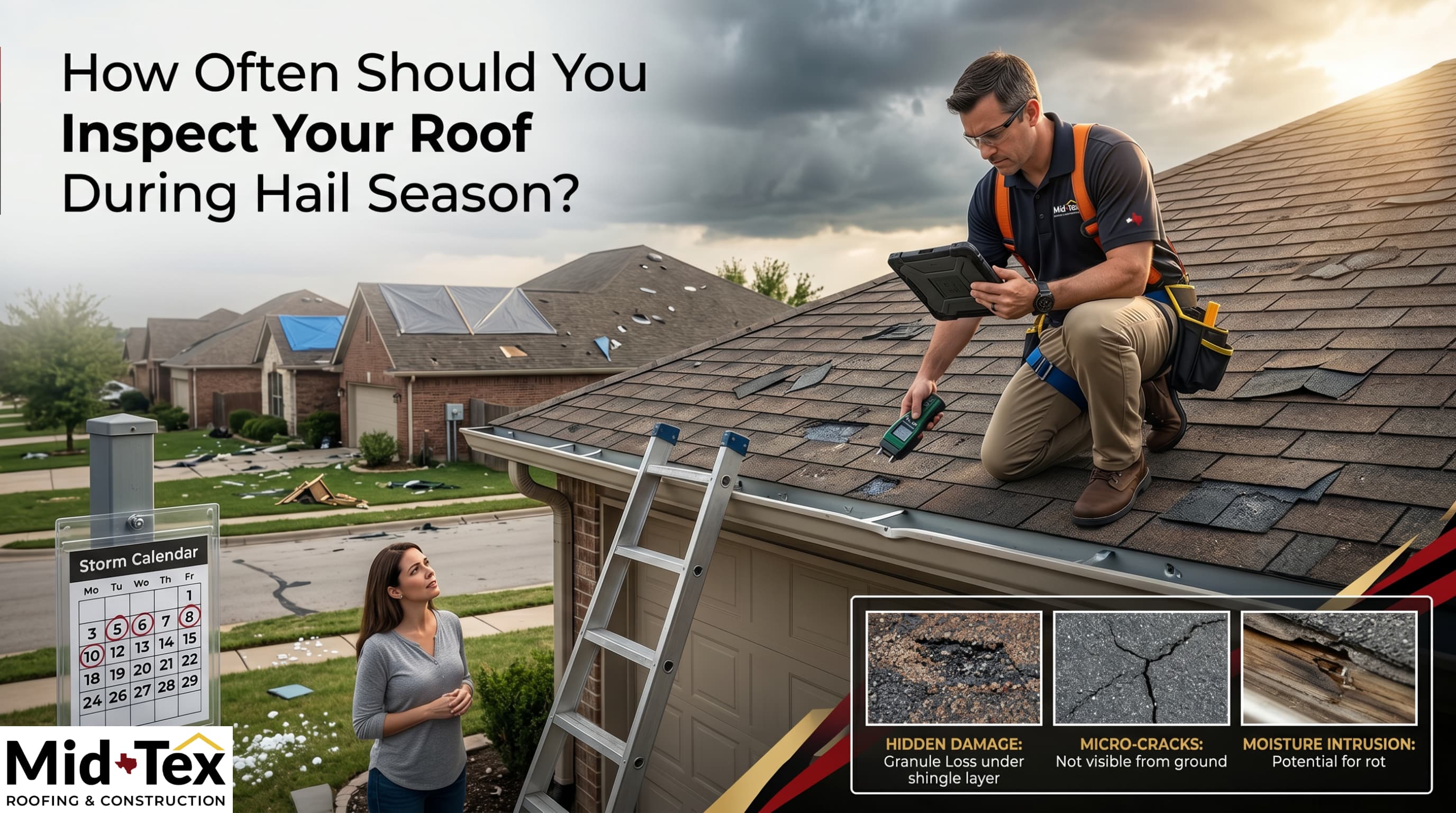
How Often Should You Inspect Your Roof During Hail Season?
In Central Texas, hail season is not just a possibility — it is something homeowners must prepare for every year. Communities like Dublin, Riesel, Godley, Hallsburg, Groesbeck, Lake Limestone, and surrounding areas regularly experience severe storms capable of damaging roofs, gutters, flashing, siding, and other parts of the home. One of the biggest mistakes homeowners […]

Can Small Hailstones Really Damage Your Roof?
When most homeowners think about hail damage, they picture baseball-sized hail crashing through windows and destroying rooftops. But in many Texas storms, the hailstones are much smaller — sometimes only pea-sized or marble-sized. This often leads homeowners in Dublin, Riesel, Godley, Hallsburg, Groesbeck, Lake Limestone, and surrounding Central Texas communities to ask: “Can small hailstones […]