
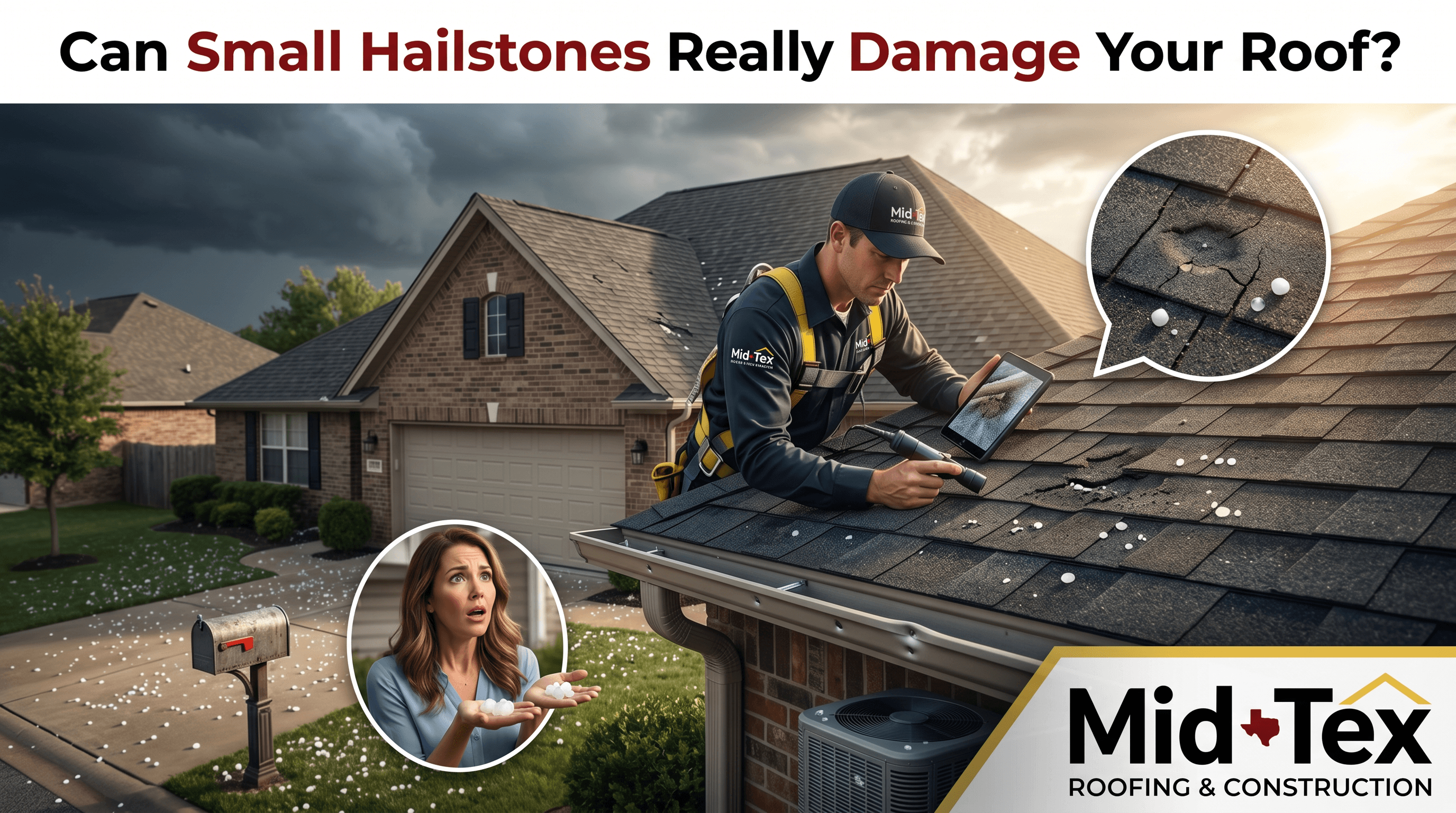
When most homeowners think about hail damage, they picture baseball-sized hail crashing through windows and destroying rooftops. But in many Texas storms, the hailstones are much smaller — sometimes only pea-sized or marble-sized.
This often leads homeowners in Dublin, Riesel, Godley, Hallsburg, Groesbeck, Lake Limestone, and surrounding Central Texas communities to ask:
“Can small hailstones actually damage my roof?”
The answer is yes.
Even small hailstones can cause roof damage under the right conditions, especially when combined with:
- High winds
- Repeated storms
- Aging roofing materials
- Texas heat
- Existing roof wear
The problem is that small hail damage often goes unnoticed until it turns into larger and more expensive issues.
At Mid-Tex Roofing, we help homeowners identify both visible and hidden hail damage through:
- Free roof inspections
- Emergency tarps
- Dry-ins
- Board-up services
- Insurance claim assistance
- Roof replacement services
- Metal roofing upgrades
If your area recently experienced hail, understanding how even small hailstones affect your roof can help you protect your home before the next storm arrives.
Why Small Hailstones Can Still Cause Roof Damage
Many homeowners assume small hail is harmless because it does not create immediate holes or dramatic destruction.
However, roof damage is not always about size alone.
Damage severity depends on several factors including:
- Wind speed
- Hail density
- Roof age
- Roofing material
- Storm duration
- Roof slope
- Previous storm exposure
Even small hailstones traveling at high speeds can weaken roofing materials over time.
Think of it like repeated impacts slowly breaking down the protective layers of the roof.
Texas Weather Makes Small Hail More Dangerous
Central Texas weather creates unique challenges for roofing systems.
Your roof constantly faces:
- Intense UV exposure
- Extreme heat
- High winds
- Heavy rain
- Sudden temperature shifts
When small hail impacts already weakened roofing materials, deterioration accelerates quickly.
For example:
- Granules loosen more easily
- Shingles become brittle faster
- Sealants weaken
- Small cracks expand
- Wind lifts damaged shingles
This is why even smaller hailstorms can shorten the life of a roof in Texas.
The Most Common Damage Caused by Small Hailstones
Small hail usually creates subtle damage instead of catastrophic destruction.
Common examples include:
- Granule loss
- Light bruising on shingles
- Small dents on gutters
- Flashing wear
- Loosened seal strips
- Tiny surface cracks
- Minor punctures
At first glance, these issues may appear minor.
However, over time they can lead to:
- Roof leaks
- Water intrusion
- Mold growth
- Structural deterioration
- Premature roof replacement
Granule Loss Is One of the Biggest Problems
Asphalt shingles rely on protective granules to defend against:
- UV rays
- Heat
- Moisture
- Weather erosion
Small hail impacts can gradually loosen or remove these granules.
After a storm, homeowners may notice:
- Granules in gutters
- Granules near downspouts
- Uneven roof coloring
- Bare spots on shingles
Without granules, shingles become exposed to direct Texas sunlight.
This accelerates:
- Drying
- Cracking
- Curling
- Brittleness
- Roof aging
Granule loss is one of the most common ways small hail shortens roof lifespan.
Repeated Small Hailstorms Cause Cumulative Damage
One small hailstorm may not destroy a roof immediately.
The real problem occurs when roofs experience repeated minor impacts over time.
Texas homes often endure:
- Multiple hailstorms per year
- Wind-driven rain
- Seasonal temperature extremes
Each storm weakens roofing materials a little more.
Eventually:
- Small bruises become cracks
- Sealants fail
- Shingles loosen
- Moisture enters the roof system
This cumulative damage often explains why roofs suddenly begin leaking after years of “minor” storms.
Older Roofs Are More Vulnerable to Small Hail Damage
Roof age plays a major role in hail resistance.
Older shingles naturally become:
- Drier
- Less flexible
- More brittle
- More vulnerable to cracking
Even relatively small hailstones can damage aging roofing systems more easily than newer roofs.
If your roof is:
- 10–20+ years old
- Already weathered
- Previously storm-damaged
…small hail impacts may cause much more serious deterioration than expected.
If your older roof recently experienced hail in Groesbeck, Godley, Dublin, or nearby areas, schedule a FREE inspection with Mid-Tex Roofing today.
 (254) 218-3735
 Free Inspection
Wind Speed Matters More Than Many Homeowners Realize
Hail size is only part of the equation.
Wind speed dramatically increases impact force.
For example:
- Small hail traveling at high velocity
- Wind-driven hail striking at sharp angles
- Repeated impacts during strong storms
…can all increase roof damage potential.
In severe Texas thunderstorms, smaller hailstones combined with strong winds may damage roofs similarly to larger hail in calmer conditions.
Hidden Damage Is Extremely Common
One of the most dangerous aspects of small hail damage is that homeowners often cannot see it from the ground.
Hidden hail damage may include:
- Bruised shingles
- Fractured fiberglass mats
- Lifted seal strips
- Moisture intrusion beneath shingles
- Tiny punctures
- Flashing separation
Over time, these hidden issues can lead to:
- Roof leaks
- Mold growth
- Ceiling stains
- Wood rot
- Energy inefficiency
This is why professional roof inspections after storms are so important.
Can Small Hail Cause Roof Leaks?
Yes.
Small hail may not create immediate holes in the roof, but it can weaken protective layers enough to eventually allow water intrusion.
Leaks often develop when:
- Cracks expand over time
- Wind lifts weakened shingles
- Sealants fail
- Moisture enters hidden openings
In many cases, homeowners discover leaks months after the original hailstorm occurred.
By then, additional interior damage may already exist.
Signs Your Roof May Have Small Hail Damage
After a storm, watch for:
- Granules in gutters
- Small dents on metal surfaces
- Roof discoloration
- Cracked shingles
- Ceiling stains
- Minor leaks
- Damaged flashing
- Missing shingle corners
You should also inspect:
- Mailboxes
- AC units
- Window screens
- Gutters
- Downspouts
If hail dented metal surfaces around your property, your roof may also have sustained damage.
Minor Damage Can Become Major Damage
One of the biggest mistakes homeowners make is assuming small hail damage can safely be ignored.
Unfortunately, untreated damage often worsens rapidly under Texas weather conditions.
Heat, UV rays, rain, and wind continue stressing weakened roofing materials until:
- Cracks spread
- Shingles fail
- Moisture penetrates deeper
- Structural deterioration begins
What starts as cosmetic damage may eventually require major roof repairs or full replacement.
Insurance Claims for Small Hail Damage
Some homeowners hesitate to file claims because the hail seemed “too small” to matter.
However, insurance companies evaluate:
- Functional roof damage
- Roof condition
- Water intrusion risks
- Structural compromise
Even smaller hail can qualify for insurance-covered repairs if the damage affects roof performance.
Professional inspections and documentation help determine:
- Whether claim-worthy damage exists
- Repair versus replacement options
- Long-term roof concerns
At Mid-Tex Roofing, we assist homeowners with:
- Roof inspections
- Damage documentation
- Insurance claim assistance
- Adjuster meetings
- Repair planning
Our in-house adjusters help ensure storm damage is properly documented.
Emergency Services Still Matter After Small Hailstorms
Sometimes small hailstorms combine with:
- Wind damage
- Fallen debris
- Broken flashing
- Roof leaks
In these situations, immediate protection may still be necessary.
Mid-Tex Roofing provides: Emergency tarps Dry-ins Board-up services
These temporary solutions help:
- Prevent additional water intrusion
- Protect structural materials
- Reduce mold risk
- Preserve insurance eligibility
Why More Homeowners Are Upgrading to Metal Roofing
Repeated hail exposure is one reason many Texas homeowners are upgrading roofing systems after storms.
Standing seam metal roofs have become increasingly popular because they offer:
- Better durability
- Longer lifespan
- Improved storm resistance
- Energy efficiency
- Lower long-term maintenance
Standing seam systems use concealed fasteners that help reduce water intrusion and weather-related wear.
While no roofing system is completely damage-proof, metal roofs often perform better over time in hail-prone regions.
Why Professional Roof Inspections Matter
Small hail damage is often impossible to identify without proper training.
Professional inspections evaluate:
- Granule loss
- Shingle bruising
- Flashing damage
- Moisture intrusion risks
- Sealant failure
- Structural concerns
At Mid-Tex Roofing, our FREE inspections help homeowners understand:
- Whether damage exists
- The severity of roof wear
- Insurance claim possibilities
- Repair versus replacement options
Early inspections help prevent small problems from becoming expensive repairs later.
Protect Your Roof Before the Next Storm
Texas weather is unpredictable.
Even small hailstorms can gradually weaken roofing systems and shorten roof lifespan over time.
Whether your roof needs:
- Minor repairs
- Emergency tarps
- Dry-ins
- Insurance claim assistance
- Full roof replacement
- Standing seam metal roofing upgrades
…the team at Mid-Tex Roofing is ready to help.
We proudly serve:
- Dublin
- Riesel
- Godley
- Hallsburg
- Groesbeck
- Lake Limestone
- Surrounding Central Texas communities
Call Today: (254) 218-3735 Visit: Free Estimate
Frequently Asked Questions About Small Hail Damage
Can pea-sized hail damage a roof?
Yes. Even small hailstones can loosen granules, bruise shingles, and weaken roofing materials over time.
How do I know if small hail damaged my roof?
Signs may include granule loss, dents on gutters, bruised shingles, leaks, or damaged flashing. Some damage is hidden and requires professional inspection.
Can small hail cause roof leaks later?
Yes. Minor hail damage can worsen over time and eventually lead to leaks and moisture intrusion.
Should I inspect my roof after every hailstorm?
Yes. Even smaller storms can create cumulative damage that shortens roof lifespan.
Does homeowners insurance cover small hail damage?
If the damage affects roof function or creates repair needs, insurance coverage may apply depending on your policy.
Are older roofs more vulnerable to small hail?
Absolutely. Aging shingles become brittle and are more easily damaged by hail impacts.
Are metal roofs better for hail-prone Texas areas?
Standing seam metal roofs are often more durable and weather resistant than traditional shingles, making them increasingly popular in Texas storm-prone regions.
Need a Roof Inspection?
Free, no-pressure estimates across Central Texas. Storm damage, replacements, repairs — we handle it all.
Keep Reading
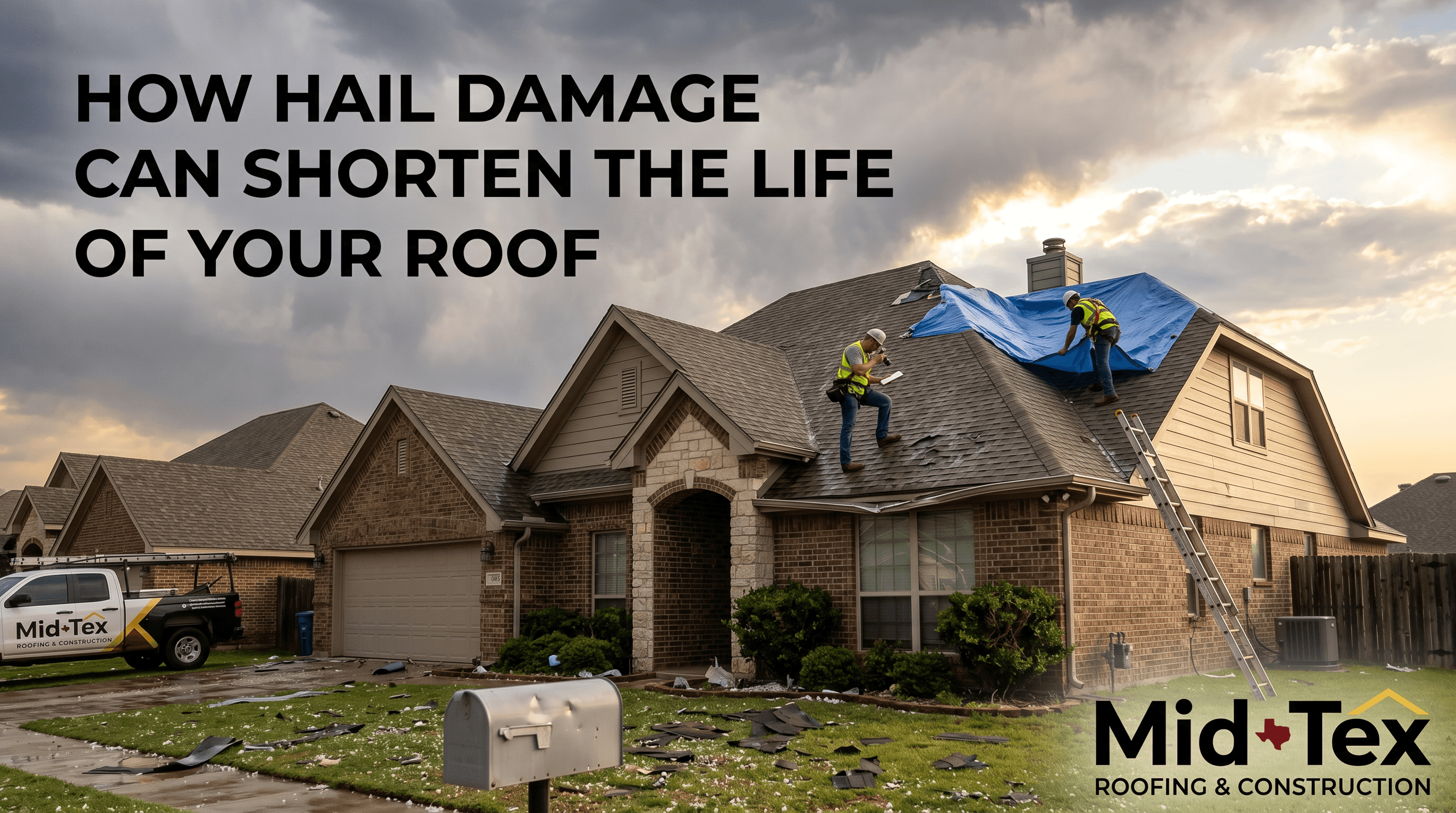
How Hail Damage Can Shorten the Life of Your Roof
In Texas, hail storms are more than just temporary weather events — they can silently destroy the lifespan of your roof long before you ever notice a leak. Homeowners throughout Dublin, Riesel, Godley, Hallsburg, Groesbeck, Lake Limestone, and surrounding Central Texas communities have recently experienced severe hail storms capable of causing both visible and hidden […]
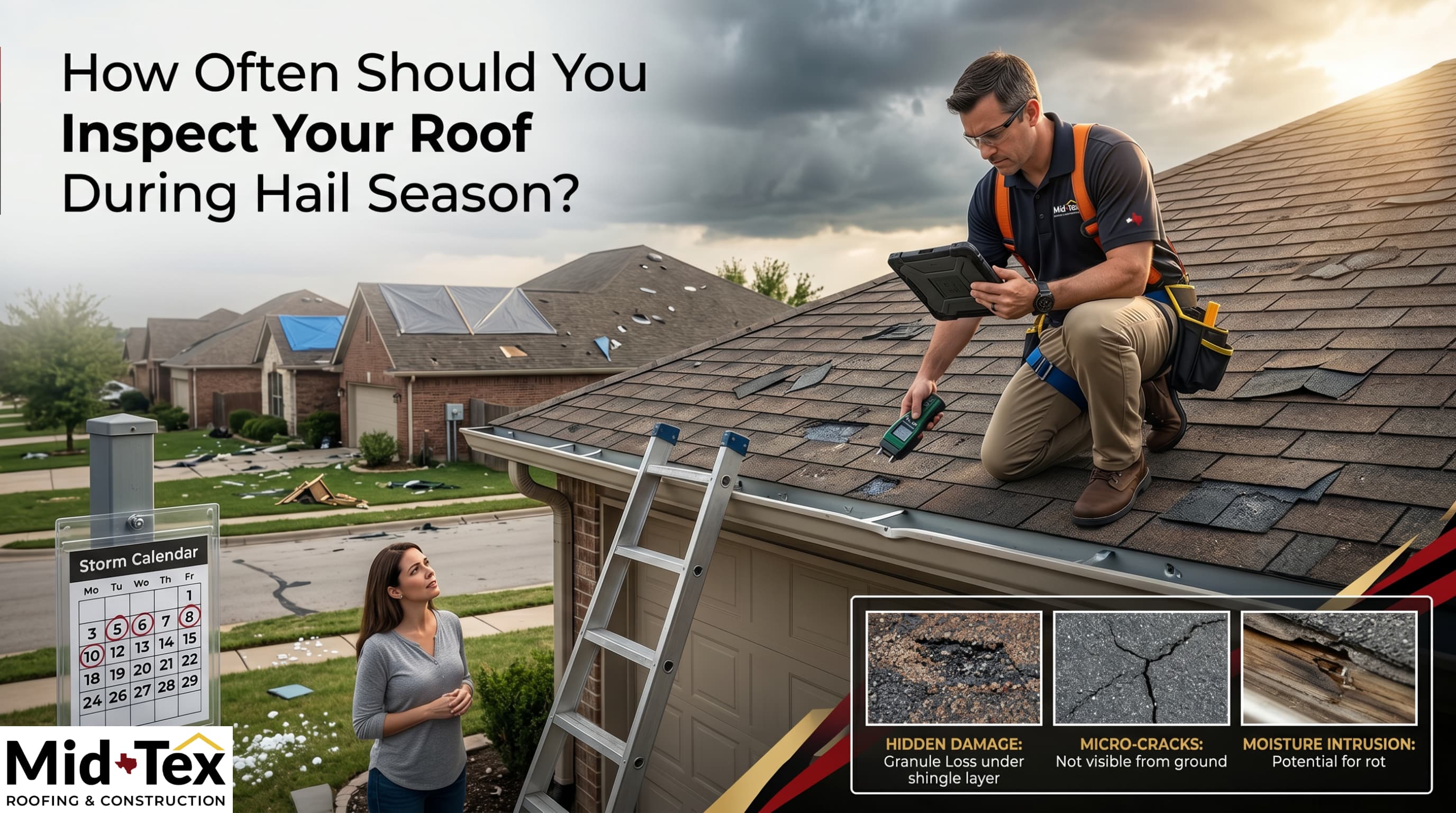
How Often Should You Inspect Your Roof During Hail Season?
In Central Texas, hail season is not just a possibility — it is something homeowners must prepare for every year. Communities like Dublin, Riesel, Godley, Hallsburg, Groesbeck, Lake Limestone, and surrounding areas regularly experience severe storms capable of damaging roofs, gutters, flashing, siding, and other parts of the home. One of the biggest mistakes homeowners […]
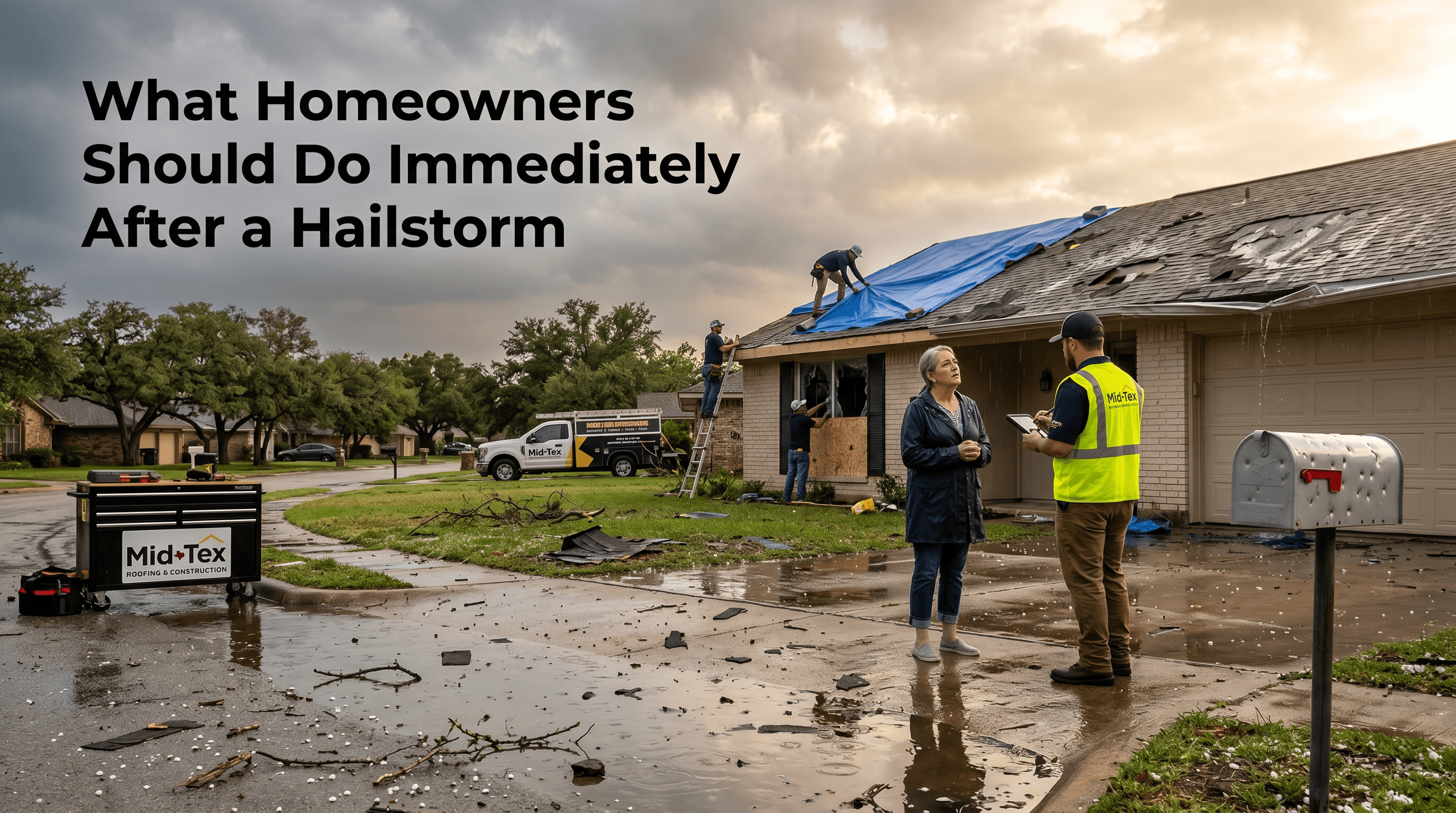
What Homeowners Should Do Immediately After a Hailstorm
Hail storms can move through Central Texas in minutes, but the damage they leave behind can impact your home for years. In areas like Dublin, Riesel, Godley, Hallsburg, Groesbeck, and Lake Limestone, recent storms have left homeowners dealing with damaged roofs, broken windows, leaks, fallen debris, and unexpected repair costs. One of the biggest mistakes […]