
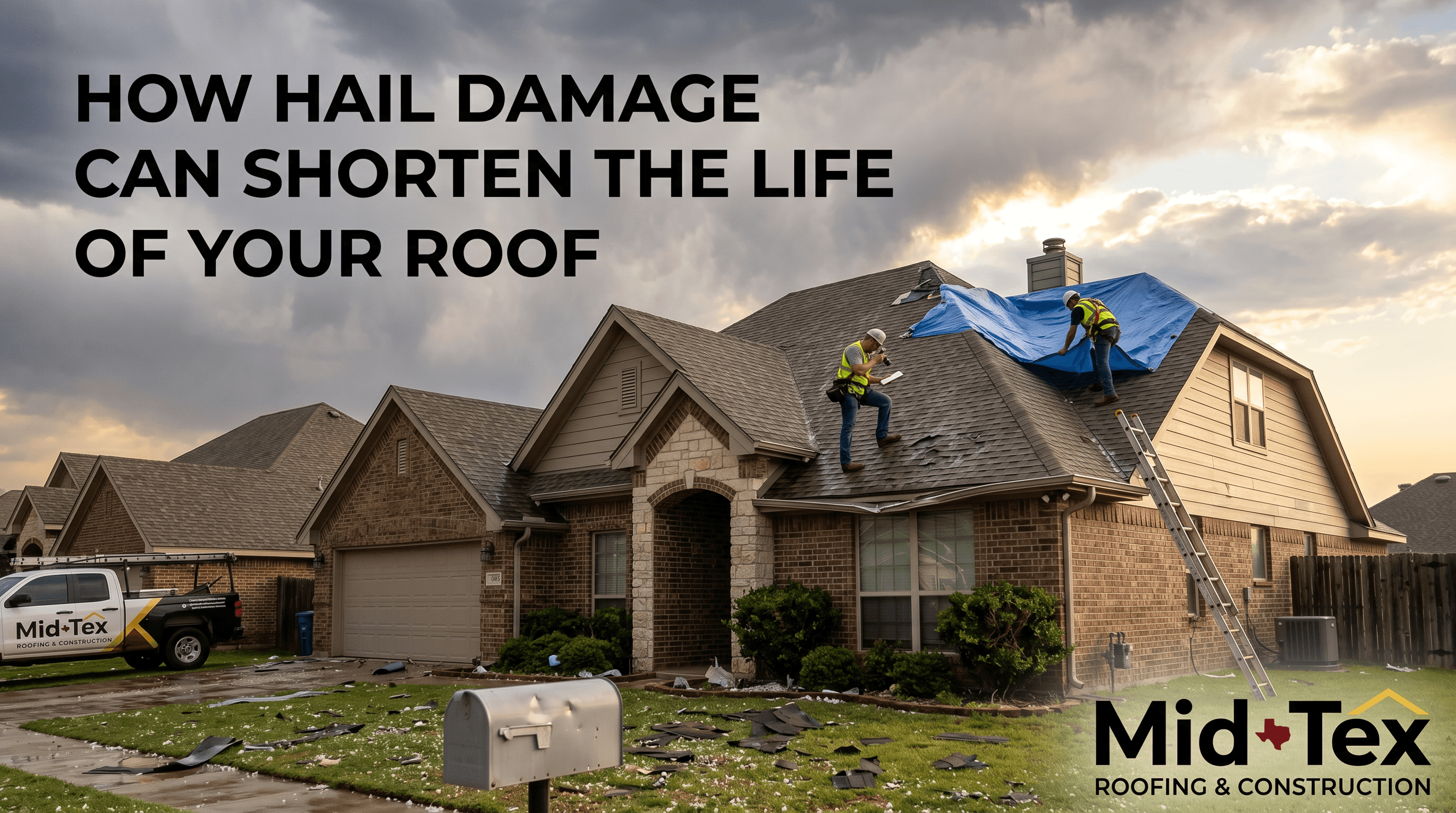
In Texas, hail storms are more than just temporary weather events — they can silently destroy the lifespan of your roof long before you ever notice a leak.
Homeowners throughout Dublin, Riesel, Godley, Hallsburg, Groesbeck, Lake Limestone, and surrounding Central Texas communities have recently experienced severe hail storms capable of causing both visible and hidden roof damage.
The challenge is that hail damage does not always create immediate problems. In many cases, a roof may appear “fine” from the ground while the storm has already weakened shingles, loosened protective granules, damaged sealants, and compromised the structural integrity of the roofing system.
Over time, this hidden damage can significantly shorten the life of your roof and lead to:
- Expensive leaks
- Mold growth
- Structural wood rot
- Energy inefficiency
- Premature roof replacement
At Mid-Tex Roofing, we help homeowners identify storm damage early through:
- Free roof inspections
- Emergency tarps and dry-ins
- Board-up services
- Insurance claim assistance
- Roof replacement services
- Standing seam metal roofing upgrades
If your home recently experienced hail, understanding how storm damage impacts your roof can help you avoid major repair costs later.
Hail Damage Often Starts Small
One of the biggest misconceptions homeowners have is believing hail damage only matters if there are obvious holes or major leaks.
In reality, hail damage often begins with small impacts that weaken roofing materials over time.
When hail strikes a roof, it can:
- Crack shingles
- Dislodge protective granules
- Fracture fiberglass layers
- Damage flashing
- Break seal strips
- Create soft bruising beneath the surface
Even minor impacts can reduce your roof’s ability to protect your home from future storms, UV rays, and moisture intrusion.
Texas heat combined with storm exposure accelerates this deterioration even faster.
A roof designed to last 20–30 years may lose significant lifespan after just one major hail storm if the damage is left untreated.
The Texas Climate Makes Hail Damage Worse
Texas roofs already face some of the harshest weather conditions in the country.
Your roof regularly endures:
- Intense UV exposure
- Extreme heat
- High winds
- Heavy rain
- Sudden temperature shifts
- Severe thunderstorms
- Hail impacts
When hail weakens roofing materials, the Texas climate speeds up the breakdown process.
For example:
- Granule loss exposes shingles to direct sunlight
- Heat dries out damaged shingles faster
- Rain penetrates weakened areas
- Wind lifts compromised shingles
- Moisture enters hidden cracks
This creates a cycle where small storm damage becomes major roof deterioration.
Granule Loss and Why It Matters
Asphalt shingles are covered with protective granules that act as a shield against:
- UV rays
- Heat damage
- Moisture exposure
- Weather erosion
Hail impact can knock these granules loose.
After a storm, homeowners may notice:
- Granules in gutters
- Granules near downspouts
- Bare spots on shingles
- Uneven roof coloring
Once granules are lost, shingles become vulnerable to rapid aging.
Without protection, the sun begins drying out the asphalt layer underneath. This causes shingles to:
- Crack
- Curl
- Become brittle
- Lose flexibility
- Fail prematurely
Granule loss is one of the most common reasons hail damage shortens roof lifespan in Central Texas.
Hidden Hail Damage Can Be the Most Dangerous
Some of the worst hail damage cannot be seen from the ground.
A roof may appear normal while hidden structural damage continues to spread underneath.
Examples of hidden hail damage include:
- Bruised shingles
- Cracked fiberglass mats
- Tiny punctures
- Lifted seal strips
- Flashing separation
- Water intrusion beneath shingles
Over time, hidden damage can lead to:
- Slow roof leaks
- Mold growth
- Damaged insulation
- Interior ceiling stains
- Rotting wood decking
By the time homeowners notice interior water damage, the roofing system may already require major repairs or full replacement.
This is why professional roof inspections after severe storms are so important.
If your home in Groesbeck, Godley, Dublin, or Lake Limestone recently experienced hail, schedule a FREE roof inspection with Mid-Tex Roofing today.
 (254) 218-3735
 Contact Us
Damaged Sealants Allow Water Intrusion
Most homeowners focus on shingles after a hail storm, but roofing sealants are equally important.
Sealants protect vulnerable areas around:
- Roof vents
- Chimneys
- Flashing
- Valleys
- Skylights
Hail impacts can crack or weaken these protective barriers.
Once sealants fail, water can slowly seep into the roofing system even without visible roof holes.
Water intrusion often leads to:
- Wood rot
- Mold
- Mildew
- Insulation damage
- Structural deterioration
These hidden moisture problems can shorten the life of both the roof and the home itself.
Wind and Hail Work Together
In Texas storms, hail damage rarely happens alone.
Strong winds often accompany hail and create additional roofing stress.
Hail weakens shingles while wind:
- Lifts loosened shingles
- Breaks adhesive seals
- Exposes underlayment
- Allows moisture underneath roofing materials
This combination dramatically increases roof deterioration after storms.
Even roofs that appear intact may have compromised wind resistance after hail impacts.
The next major storm can then cause significantly more severe damage because the roof system has already been weakened.
Why Small Leaks Become Big Problems
A tiny roof leak may not seem urgent at first.
However, small leaks often create the most expensive long-term damage because they remain hidden for extended periods.
Slow leaks can affect:
- Attic insulation
- Ceiling drywall
- Electrical systems
- Wood framing
- Indoor air quality
Mold growth can begin within 24–48 hours of moisture exposure.
In many cases, homeowners discover hidden roof leaks months after a hail storm — long after the original damage occurred.
This delayed discovery can complicate insurance claims and increase repair costs.
Insurance Claims and Roof Lifespan
Many homeowners hesitate to file insurance claims after hail storms because the roof still “looks okay.”
Unfortunately, untreated storm damage often worsens over time.
Insurance companies may question delayed claims if:
- Damage was not documented quickly
- Additional storms occurred later
- Repairs were postponed too long
Scheduling a professional inspection immediately after a storm creates important documentation.
At Mid-Tex Roofing, our team helps homeowners by:
- Identifying storm-related damage
- Photographing affected areas
- Meeting with insurance adjusters
- Assisting throughout the claims process
Our in-house adjusters help ensure damage is properly documented before it turns into larger problems.
Temporary Protection Can Save Your Roof
After severe storms, immediate protection can dramatically reduce additional damage.
Emergency services such as:
- Roof tarps
- Dry-ins
- Board-up services
…help prevent water intrusion while repairs or insurance approvals are pending.
Without temporary protection:
- Rainwater can enter exposed areas
- Structural damage may worsen
- Mold growth can spread
- Repair costs can increase rapidly
Quick action after a storm can significantly extend the remaining life of your roof.
Emergency Storm Response Available
Mid-Tex Roofing provides fast emergency storm response throughout Central Texas.
Metal Roofs and Hail Resistance
Many Texas homeowners are now upgrading to standing seam metal roofing after hail storms.
Why?
Because metal roofs often provide:
- Longer lifespan
- Better weather resistance
- Increased durability
- Improved energy efficiency
- Lower long-term maintenance
Standing seam metal roofs use concealed fasteners, which help reduce water intrusion and weather-related wear.
While no roof is completely damage-proof, many metal roofing systems handle hail better than traditional asphalt shingles over time.
For homeowners planning long-term protection in hail-prone areas like Riesel, Hallsburg, and Godley, metal roofing may offer added peace of mind.
Signs Your Roof May Already Be Aging Faster
After a hail storm, watch for these warning signs:
- Missing shingles
- Cracked shingles
- Granules in gutters
- Ceiling stains
- Roof leaks
- Dented gutters
- Soft spots on shingles
- Mold smells
- Rising energy bills
- Sagging roof sections
These issues may indicate your roof has already suffered damage that is shortening its lifespan.
The sooner these problems are identified, the better chance you have of preventing larger repairs.
Why Professional Roof Inspections Matter
Many forms of hail damage require trained eyes to identify properly.
Professional roofing inspections evaluate:
- Shingle integrity
- Hidden bruising
- Flashing damage
- Sealant condition
- Ventilation issues
- Structural concerns
- Water intrusion risks
At Mid-Tex Roofing, our inspections help homeowners understand:
- The current condition of the roof
- Whether repairs or replacement are needed
- Potential insurance claim eligibility
- Options for upgraded roofing systems
Best of all, inspections are FREE.
Protect Your Home Before the Next Storm
Texas weather is unpredictable.
The damage from one storm can weaken your roof and leave your home vulnerable during the next severe weather event.
Whether you need:
- Emergency tarps
- Dry-ins
- Board-up services
- Insurance claim help
- Roof repairs
- Full roof replacement
- Standing seam metal roofing
…the team at Mid-Tex Roofing is here to help.
We proudly serve:
- Dublin
- Riesel
- Godley
- Hallsburg
- Groesbeck
- Lake Limestone
- Surrounding Central Texas communities
Call Today: (254) 218-3735 Contact
Frequently Asked Questions About Hail Damage and Roof Lifespan
Can hail damage shorten the life of my roof even if it doesn’t leak?
Yes. Hail damage weakens shingles and roofing materials, causing accelerated aging even before leaks appear.
How long after a hail storm should I inspect my roof?
As soon as possible. Early inspections help identify hidden damage and support insurance documentation.
Does insurance cover hail damage roof replacement?
Most homeowners insurance policies cover hail-related damage depending on your policy and deductible.
What is hidden hail damage?
Hidden hail damage includes bruised shingles, fractured fiberglass mats, damaged sealants, and moisture intrusion not visible from the ground.
Can small hail still damage a roof?
Yes. Even smaller hail can loosen granules, weaken shingles, and reduce roof lifespan over time.
Are metal roofs better for Texas hail storms?
Standing seam metal roofs are often more durable and weather resistant than traditional shingles, making them popular in hail-prone Texas regions.
What should I do immediately after a hail storm?
Document damage, schedule a professional inspection, prevent additional water intrusion, and contact your insurance provider if damage is confirmed.
Need a Roof Inspection?
Free, no-pressure estimates across Central Texas. Storm damage, replacements, repairs — we handle it all.
Keep Reading
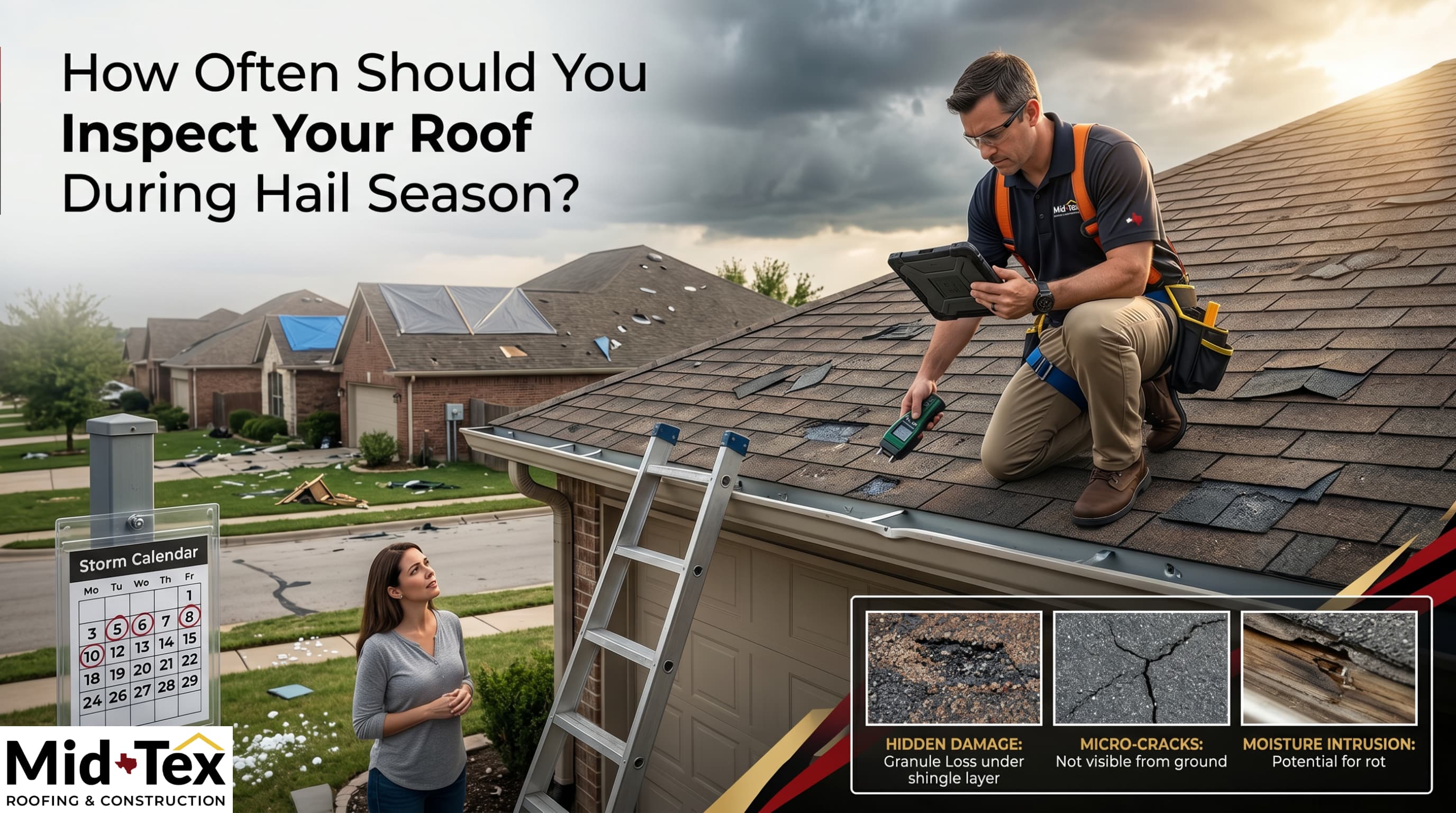
How Often Should You Inspect Your Roof During Hail Season?
In Central Texas, hail season is not just a possibility — it is something homeowners must prepare for every year. Communities like Dublin, Riesel, Godley, Hallsburg, Groesbeck, Lake Limestone, and surrounding areas regularly experience severe storms capable of damaging roofs, gutters, flashing, siding, and other parts of the home. One of the biggest mistakes homeowners […]
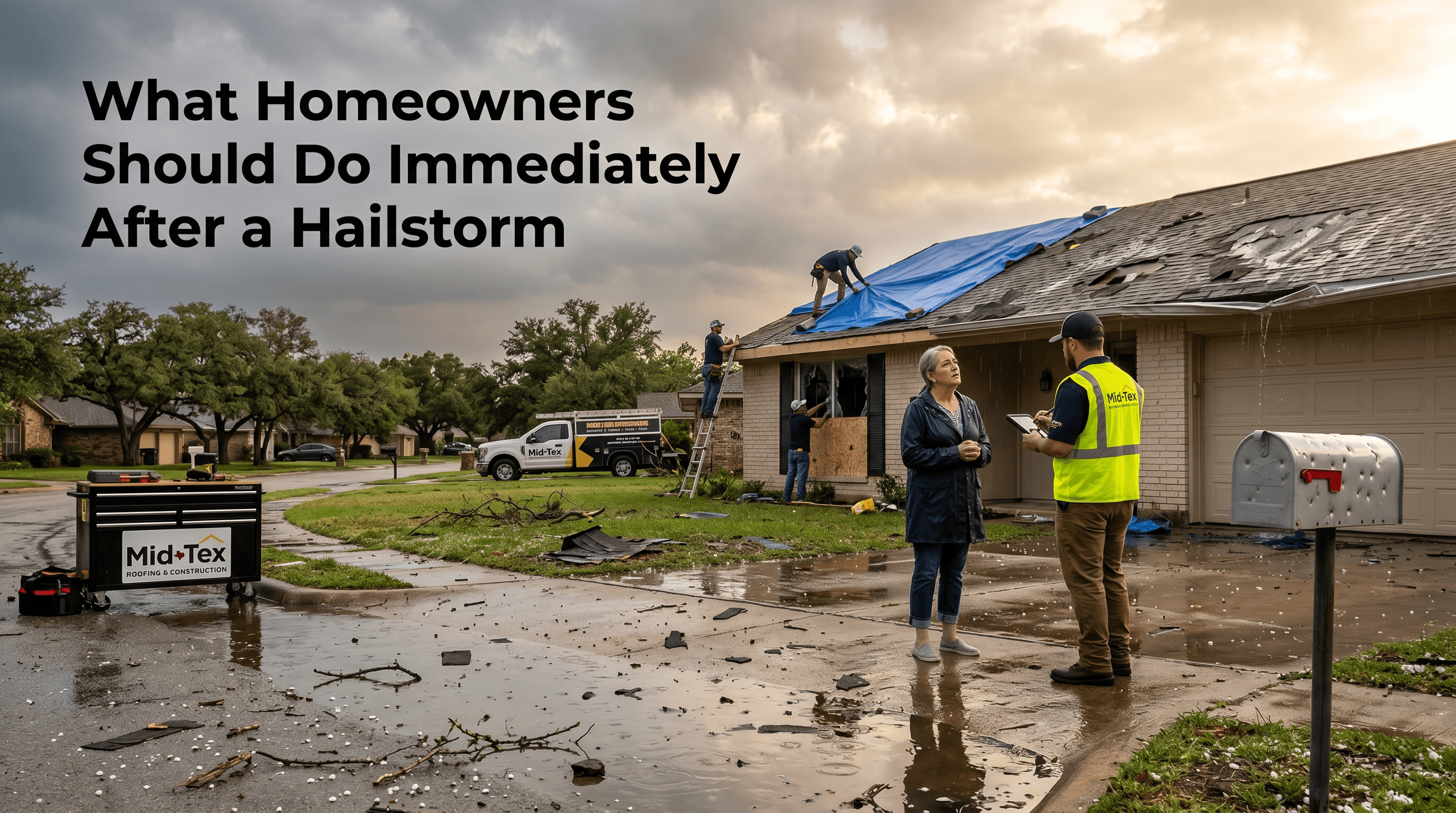
What Homeowners Should Do Immediately After a Hailstorm
Hail storms can move through Central Texas in minutes, but the damage they leave behind can impact your home for years. In areas like Dublin, Riesel, Godley, Hallsburg, Groesbeck, and Lake Limestone, recent storms have left homeowners dealing with damaged roofs, broken windows, leaks, fallen debris, and unexpected repair costs. One of the biggest mistakes […]
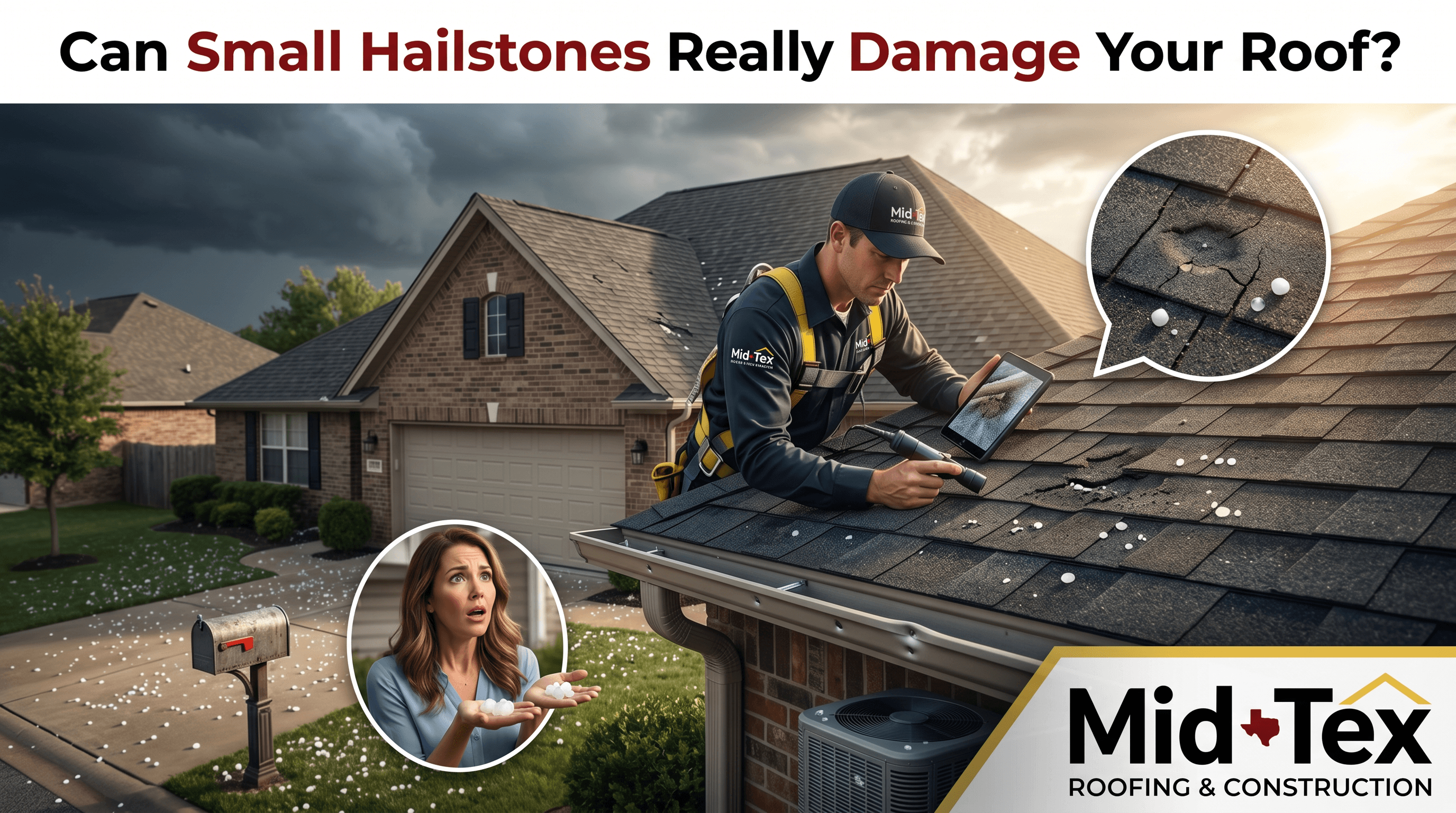
Can Small Hailstones Really Damage Your Roof?
When most homeowners think about hail damage, they picture baseball-sized hail crashing through windows and destroying rooftops. But in many Texas storms, the hailstones are much smaller — sometimes only pea-sized or marble-sized. This often leads homeowners in Dublin, Riesel, Godley, Hallsburg, Groesbeck, Lake Limestone, and surrounding Central Texas communities to ask: “Can small hailstones […]