
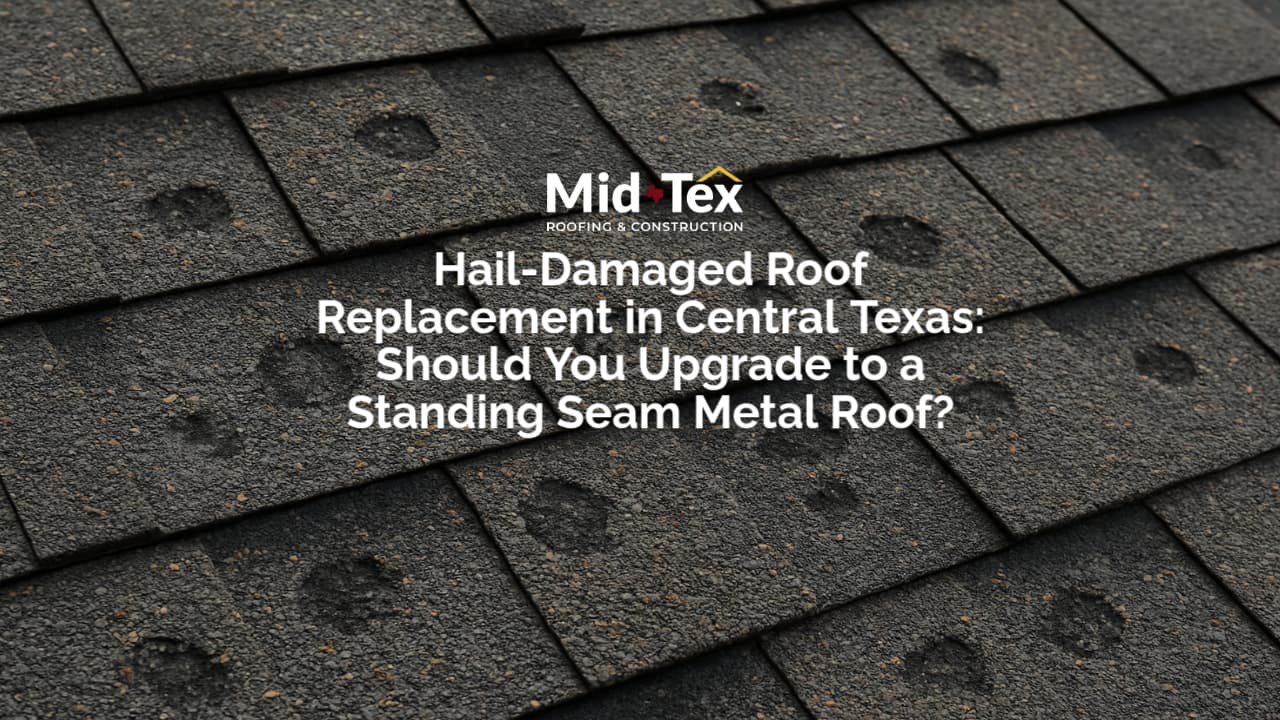
Hail-Damaged Roof Replacement in Central Texas: Should You Upgrade to a Standing Seam Metal Roof?
Severe weather is nothing new in Texas—but the storm system that swept across the state on April 30, 2026 left a significant mark on homes and businesses throughout Central Texas. Communities like Bryan–College Station, Huntsville, Waco, Temple, and Lampasas experienced hail, strong winds, and heavy rain—conditions that are especially destructive to roofing systems.
Reports from that day show widespread hail activity across Texas, with thousands of properties impacted and hailstones reaching up to nearly 2 inches in some areas . In nearby regions, hail as large as golf balls and even larger was recorded, causing significant roof and property damage .
If your property was affected, now is the time to assess your roof—and consider whether replacing your traditional shingle roof with a standing seam metal roof is the smarter long-term investment.
How Hail Damages Shingle Roofs
Asphalt shingles are the most common roofing material in Texas, but they are also one of the most vulnerable during hailstorms.
When hail strikes a shingle roof, it can:
- Knock off protective granules
- Crack or bruise the shingle mat
- Expose the underlying layers to moisture
- Shorten the lifespan of your roof
Even if damage isn’t immediately visible from the ground, compromised shingles can lead to leaks, mold, and structural issues over time. In commercial buildings, this can mean costly downtime and interior damage.
After a storm like the April 30th event, a professional inspection is critical—especially in high-impact zones like the Bryan-College Station corridor and along the I-35 region near Waco and Temple.
When Roof Replacement Is Necessary
Not all hail damage requires a full replacement—but in many cases, especially after widespread storms, it’s the most practical option.
You likely need a roof replacement if:
- Hail damage is widespread across multiple slopes
- Shingles are cracked, torn, or missing granules
- Your roof is already 10–20 years old
- Insurance has approved a full replacement
For both residential and commercial properties in Central Texas, replacing a damaged roof isn’t just about repair—it’s an opportunity to upgrade.
Why Consider a Standing Seam Metal Roof?
A standing seam metal roof is one of the most durable and weather-resistant roofing systems available today—and it’s becoming increasingly popular across Texas.
1. Superior Hail Resistance
Metal roofs are engineered to withstand impact. Unlike shingles, they don’t lose protective layers when struck by hail. Many systems are rated for Class 4 impact resistance, the highest available.
2. Long-Term Durability
While asphalt shingles typically last 15–25 years, standing seam metal roofs can last 40–70 years with minimal maintenance.
3. Energy Efficiency
Metal roofs reflect solar heat, helping reduce cooling costs—an important benefit in hot Texas climates like Temple and Huntsville.
4. Low Maintenance
No granule loss, less risk of leaks, and fewer repairs over time.
5. Modern Aesthetic Appeal
Standing seam roofs offer clean lines and a high-end look that enhances both residential and commercial properties.
Shingle vs. Metal Roofing: What’s Right for You?
| Feature | Asphalt Shingles | Standing Seam Metal |
|---|---|---|
| Lifespan | 15–25 years | 40–70 years |
| Hail Resistance | Moderate to low | High (Class 4 available) |
| Maintenance | Moderate | Low |
| Energy Efficiency | Standard | High |
| Upfront Cost | Lower | Higher |
| Long-Term Value | Moderate | Excellent |
While metal roofing has a higher upfront cost, many Texas property owners find the long-term savings and durability far outweigh the initial investment—especially after repeated hail events.
Roofing Considerations by City
Each Central Texas community faces slightly different conditions:
- Bryan – College Station: Frequent hail zones; strong candidate for impact-resistant upgrades
- Waco: Storm corridor along I-35; recurring severe weather
- Temple: Rapid growth means many newer roofs—insurance claims are common after storms
- Huntsville: High humidity + storm damage increases risk of long-term moisture issues
- Lampasas: Rural properties often experience direct hail impact with less obstruction
Insurance and Roof Replacement After Hail
Following a storm like the April 30th event, many homeowners and business owners may qualify for insurance-covered roof replacement.
A professional roofing contractor can help:
- Document hail damage
- Meet with your insurance adjuster
- Ensure your claim reflects the full extent of damage
- Upgrade your roofing system where applicable
In many cases, property owners choose to upgrade to metal roofing during an insurance claim, paying only the difference in material cost.
Final Thoughts: Is It Time to Upgrade?
The April 30th hailstorm is a reminder of how vulnerable traditional roofing systems can be in Texas. With thousands of properties impacted and ongoing severe weather patterns across the state , investing in a more durable roofing solution is a smart move.
If your roof was affected in Bryan, College Station, Huntsville, Waco, Temple, or Lampasas, now is the time to act.
Replacing your shingle roof is necessary after hail damage—but upgrading to a standing seam metal roof could be one of the best long-term decisions you make for your property.
Mid Tex Roofing specializes in hail damage inspections, insurance claim assistance, and high-quality roof replacements across Central Texas. Whether you choose shingles or metal, the right team makes all the difference.
Need a Roof Inspection?
Free, no-pressure estimates across Central Texas. Storm damage, replacements, repairs — we handle it all.
Keep Reading
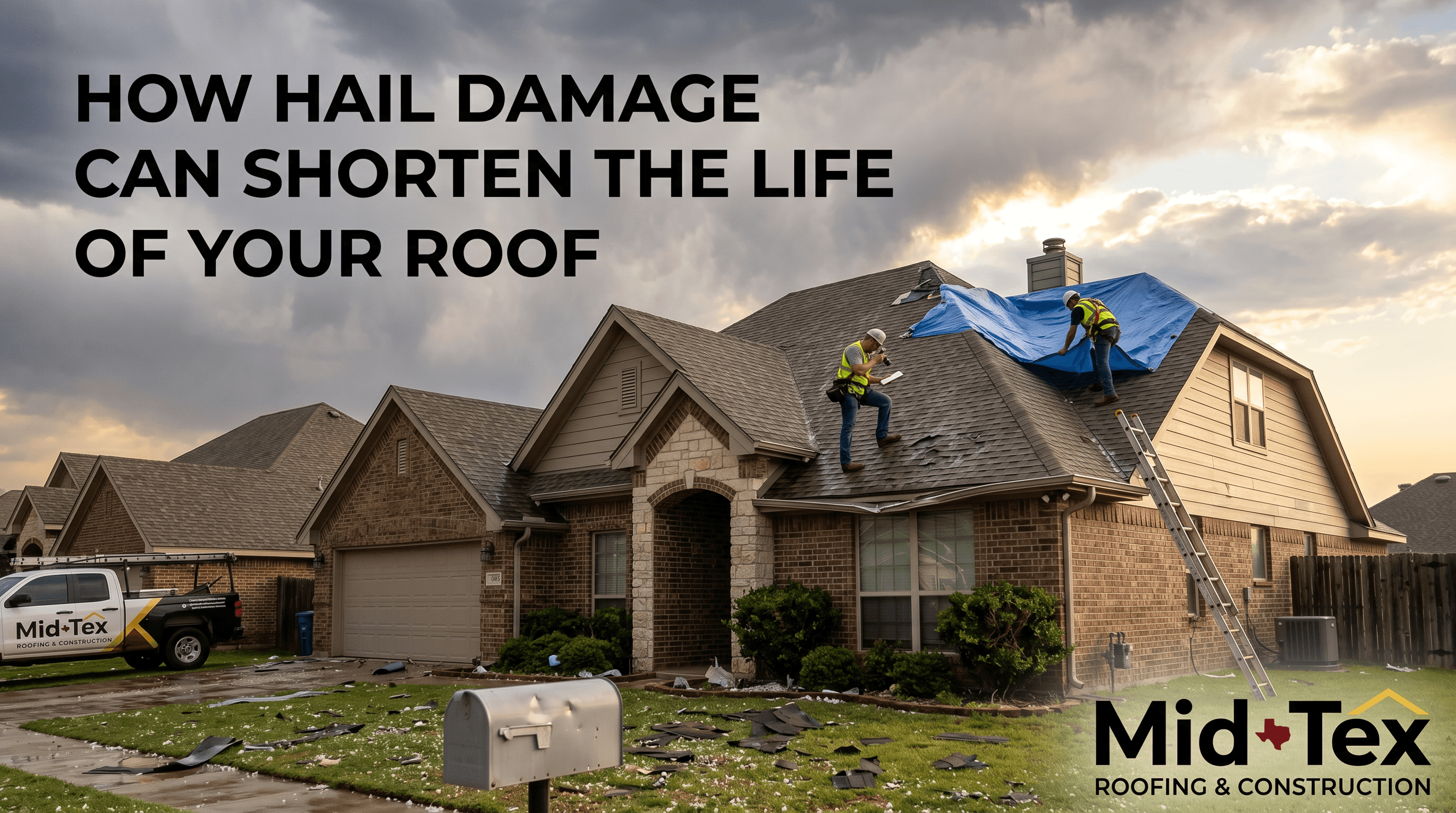
How Hail Damage Can Shorten the Life of Your Roof
In Texas, hail storms are more than just temporary weather events — they can silently destroy the lifespan of your roof long before you ever notice a leak. Homeowners throughout Dublin, Riesel, Godley, Hallsburg, Groesbeck, Lake Limestone, and surrounding Central Texas communities have recently experienced severe hail storms capable of causing both visible and hidden […]
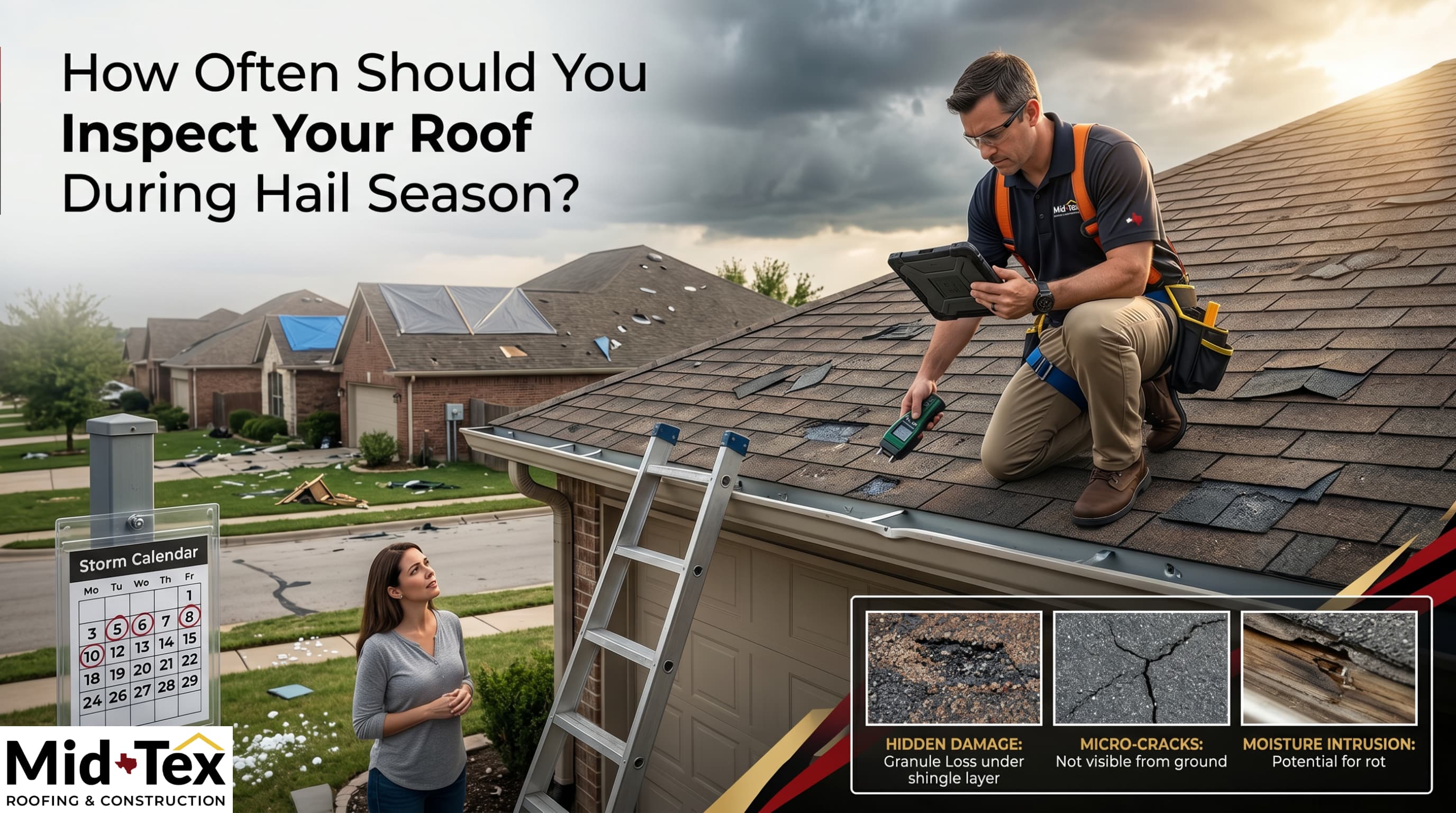
How Often Should You Inspect Your Roof During Hail Season?
In Central Texas, hail season is not just a possibility — it is something homeowners must prepare for every year. Communities like Dublin, Riesel, Godley, Hallsburg, Groesbeck, Lake Limestone, and surrounding areas regularly experience severe storms capable of damaging roofs, gutters, flashing, siding, and other parts of the home. One of the biggest mistakes homeowners […]
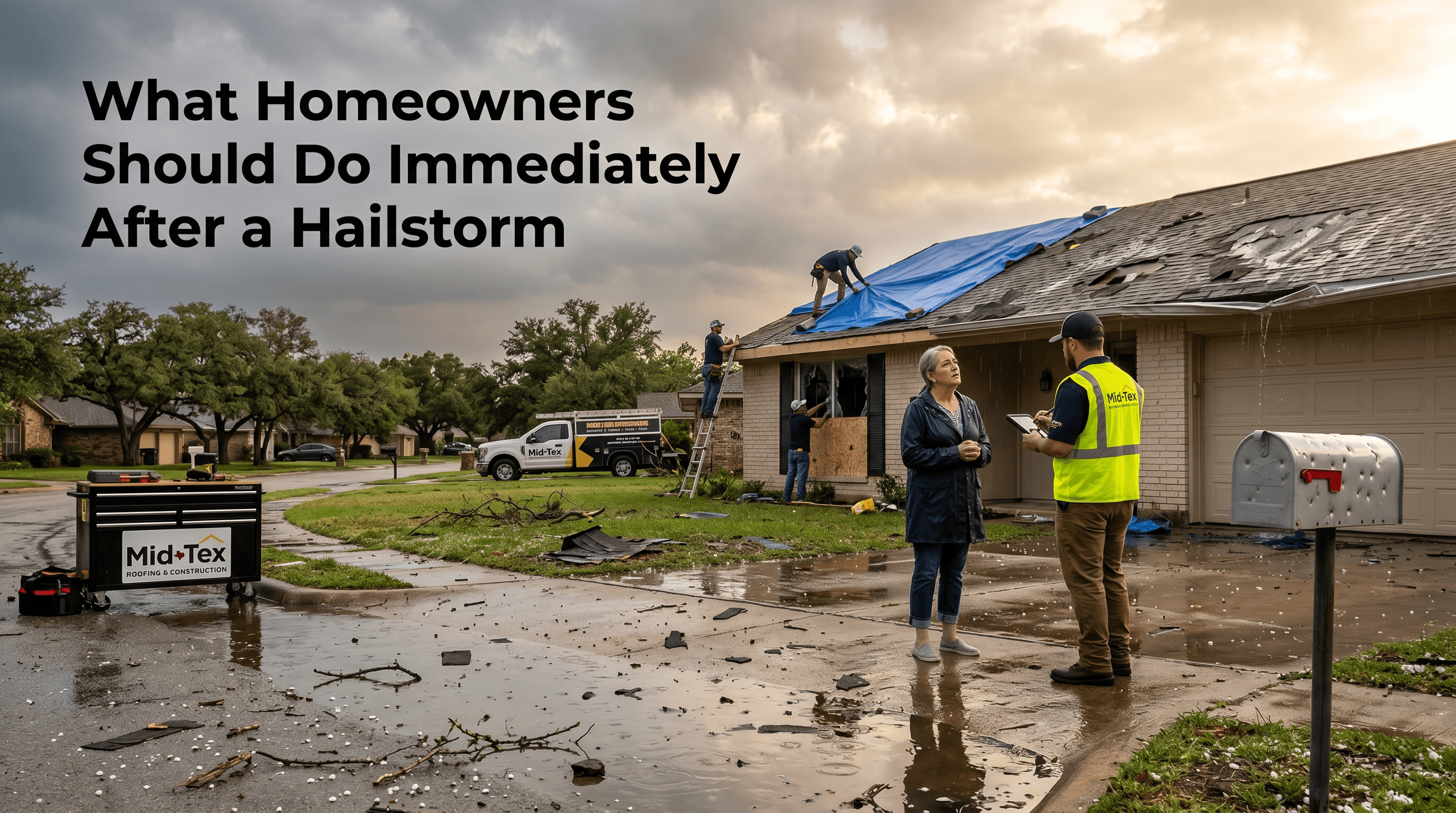
What Homeowners Should Do Immediately After a Hailstorm
Hail storms can move through Central Texas in minutes, but the damage they leave behind can impact your home for years. In areas like Dublin, Riesel, Godley, Hallsburg, Groesbeck, and Lake Limestone, recent storms have left homeowners dealing with damaged roofs, broken windows, leaks, fallen debris, and unexpected repair costs. One of the biggest mistakes […]